Categories
Uncategorized

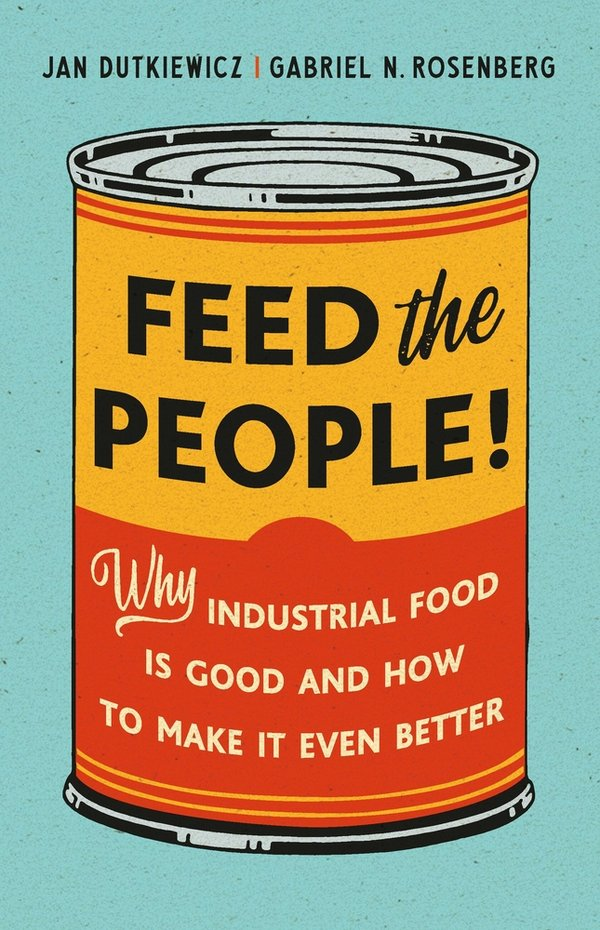
Feed The People! – A Review

I have had a quasi-nemesis in my life, a public intellectual who is prominent and popular, a common reference for many people, on issues as varied as fast food to psychedelics. I don’t strictly and oppositely disagree with his works as a public intellectual, but they’ve always been an anchor to imaginations, a palliative comfort for people. He has crafted a career out of simplifying and “clarifying” complex issues that confront the well-to-do consumer’s life, and (I would argue) give them a softer and less challenging hue. He will consider a topic that raises questions about the broader politics of the world, and a path of further inquiry, a truly romantic quest for meaning, and turn that path into a cul-de-sac for someone who still has a print magazine subscription. My quasi-nemesis has no idea I exist, but he’s haunted my workplaces and conversations for years. His name is Michael Pollan, and if you are an American who’s had thoughts about modern food in the 21st century, of course you’ve heard of him.

So, in at least one way, I am a completely partisan reviewer of Feed The People!, by Jan Dutkiewicz and Gabriel N. Rosenberg, a book that is a broad retort against the American Foodie ideology that has arisen in the wake of The Omnivore’s Dilemma, Whole Foods, myriad bougie grocery brands, chef-driven concepts, home cooking, farming, and food policy movements. This book was made for me. It tries to earnestly consider the vast array of systems that produce modern food, and weigh the benefits and the costs in a more honest manner. It’s making the bold attempt to try and be realistic about food, rather than idealistic. In many ways, it successfully accomplishes a more realistic description of modern food systems. In some notable ways, it remains idealistic about the solutions.

FTP! presents an openly contrarian take to the typical American Foodie opinions of the 21st century. In contrast to the gauzy and romantic idealism of locavores and farm-to-table food magazines and influencers, or the permacrisis of activists (and consumers and politicians) who say that “American food is broken”, Dutkiewicz and Rosenberg introduce food systems analysis to the reader, and urge a more grounded and informed understanding of how food ends up on our plates.

Using brash examples like Waffle House and Walmart, the authors point out that industrial food has developed abundance that any other age in human history would find beyond comprehension. From the efficiency of modern crop sciences to the diverse bounties of today’s grocery aisles, FTP! wants the reader to move beyond the discontent of food snobs, and earnestly appreciate what technology has enabled humanity to produce. The authors also want to highlight what they believe are actual problems within modern food, and redirect people’s attention to pressing inequalities and resource use within food production, and away from chasing Michael Pollan-fueled fantasies to farms that never were.

The book is oriented around five major areas within food– Farms, Meat, Food Access/School Lunches, Food Workers, and Processed Food. Each receives a chapter of extensive and grounded analysis of the dynamics working to create the status quo– landed gentry farmers, industrial meat, agribusiness, lunch ladies, and many other actors make an appearance. No chapter is exclusively praise or prophetic doom. This book is anti-apocalyptic, and the authors clearly wish to inform people, rather than agitate them.

As a cathartic experience, FTP! absolutely delivers. There are numerous passages and analysis that are a delightful counterpunch to Foodie Idealism– yes, the dream of “local food” often times puts many well-meaning producers into an impossible problem, of growing food on land that is, by definition, some of the most expensive acreage available (just outside blue/liberal cities). But more than catharsis, the book tries to reframe the questions to actual problems in food. Genetically modified seeds can be a net positive to food and the earth. They aren’t the problem. The issue related to GMOs is that they are often used to make environmentally-damaging pesticide use easier for producers. The Foodie Discourse is positively teeming with this kind of poor thinking, and FTP! makes big strides towards rebutting the noise.

FTP! also successfully lands the double-punch of “postive, and negative” about food, over and over again. In contrast to a lot of euphoric Foodie discourse, Dutikiewicz strive to keep both positives and negatives in their readers’ minds. Yes, a Waffle House waffle is a marvel of technology and infrastructure, but also… Waffle House workers have difficult or miserable working conditions. Modern farms are more efficient than almost any land in history, but also….farmworkers have minimal protections, even in blue states.

Yet, for a book that is so thorough in its coverage of the marvels and miseries of food, and the title’s promise of how to improve industrial systems, the solutions are sometimes a let down. The moments where the book finally does pivot to actual power in US food, and where the real problems are sourced from– it becomes a shocking transition to vague and broad strokes. After pages running through the types of modern farmers, the praise of the green agricultural revolution and the true promise of seed technologies (GMOs can be cool), it’s a harsh note to suddenly have the prescription be “We should address the incentives that undergird the model of Bayer and the most successful 5% of US farmers, including implementing penalties for Clean Water Act violations and scrapping ethanol fuel requirements”. If only it were that easy!

Reading FTP! gave me a number of opportunities to mutter “if only it were that easy!” at the solutions that were suggested. Not that any of the proffered policy ideas were wrong, but they seemed to sorely underplay the power dynamics involved in making their specific policy changes. To riff off a meme, one does not simply undergird the models of Bayer and Big Farmers– those are some of the most entrenched political powers in the nation. Labor unions are absolutely an essential tool for improving the lives of farmworkers and foodworkers, but those unions are the fruit of some of the most difficult political labor in modern life, and constantly under threat and attack. The solutions that Dutkiewicz and Rosenberg suggest are not the options for a technocratic society, they are the goals of a nationwide social democracy or democratic socialist state. I can understand why the authors would not want to underline the “political coalition” challenges in a book on industrial food, but it’s the…realistic… analysis.

Even though there’s some avowed tension between FTP! and the crunchy crowd, I think there’s still room for unity. For as much as the book likes to ping Wendell Berry for his romantic notions of farm life, and the errors that Berry’s poetic criticism might have inspired, I think the authors and Wendell Berry are more in agreement than either side might imagine. What both parties are interested in is having people attend to food– to pay attention to it, to understand it, and a belief that understanding how food is made will be good for the reader and better for food production, and for improving it. Also, as a retired animal rights activist who’s read dozens of books on food, in the interest of being honest, I have to say: FTP! is a “vegetarian” book, if a bit clandestinely. The chapter on meat lays out the impacts from the industries, and (spoiler) the industries don’t come out looking very good. This is my armchair analysis, but one of the reasons why the authors might have written the book is because, in fact, lots of good vegetarian options come from industrial food systems, and many of them qualify as “processed foods.” A defense of that world is needed in a discourse sphere of “raise your own chickens” silliness.

I think the book deserves close reading, rather than breezing through, in part because the details and solutions deserve close thought. For example, I think the authors might be presuming a little too-much stability into the modern food systems. The resource draws that have enabled the modern boom in food are not sustainable for the planet. The authors acknowledge it broadly (and in relation to meat), but the tone of the book is one that often puts the resource challenge as a “fix” to a system that (in my opinion) needs to “turn”. Also, for being a contrarian text, the book will say the contrarian part loud, but then follow up with a quieter “actually some of the Foodie critique is confirmed by research”. As one example, the authors denounce the stigma and bad thinking that the terms “processed foods” or “ultraprocessed foods” have created in food discourse, and it is a much needed corrective to the bullshit. But then a few paragraphs later they do admit that the terms, along with “hyperpalatability”, still have a valid use for food research and taxonomy of food types, and they agree with the (very confirmed) research showing that diets that are majority ultraprocessed foods are correlated with increased negative health outcomes.

This is a book for people who are foodies, and for people who are irritated by foodies. It is for people who might only know in vague terms why Food has gotten better, and would like some better information to rebut a snobby food person in their lives. The contrarian angle is refreshing for an age that is full of self-congratulatory and self-centered food consumption, and it was genuinely relieving to see some hard facts about food be stated plainly– “farmer” is just a label we use for a particular relationship to the land, namely “ownership”.

If there’s one group of folks who I’d really like to read the book, it would probably be elected Democrats and their staffers, but (keeping it real) that too is an incredibly idealistic goal– the halls of DC are walked by people who understand the power dynamics at play in food, they aren’t looking to rapidly shift power. But the sections de-romanticizing “farmers” would be a boon in itself.

But it is not a book for people looking to be assuaged in their current patterns and relationships with food, and for that the authors deserve some credit. It is far easier in this world to strike a simplistic “pro-technology” or “anti-technology” stance, and avoid the complexities that either side would deny. Dutkiewicz and Rosenberg don’t shy away from the problems or the successes of modern industrial food, nor should any of us.

Categories
Uncategorized

Cannabis Conversation Reset, 2026

Sheed, mad about Weed

I’ve been grumbling about this on social media for long enough, and today is a “weed holiday” for many purposes, but also a professional holiday for yours truly, so I’m going to lay out some…nonsectarian and sincere gripes I have, as an informed expert, about US cannabis policy and regulation.

(Disclaimer: these are purely personal takes, none of these reflect the opinions of my employer or any political group that I may be affiliated with. This is crusty weed-wonk stuff, straight from my policy-nerd heart. It is likely upsetting to some interest or another, but comes from a place of wanting good policy for everyone. I have no stakes in an active or dead cannabis license, I do not handle plants in a licensed capacity, I have not written cannabis policy for a state or municipality, I am a senior regulatory analyst for the longest-running cannabis compliance platform in the biz. I draft and review audit checklists and standard operating procedures.)

Things in legal cannabis are bad, chat. Most any thing related to a “licensed operator” and “legal weed” is struggling, dying, or dead.

This comes as a surprise to some folks, who see headlines and think “oh wow, working in weed must be awesome,” or “look at those fatcats making money on a historically oppressed substance,” and let me tell you: there aren’t any cats who are fat these days. Big companies have become medium companies, and even some of the “strongest” companies in licensed cannabis are toting around nine-figure tax bills that will come due. Small companies have sold on, closed up, or found a small size that is somewhat sustainable (if you’re on a border with a prohibition state).

And while what I’m about to say could obviously be read in a conspiratorial or seething voice, I promise you I’m just saying this as a mundane fact: the groups that have unquestionably brought in revenue in the first decade plus of adult-use cannabis are the state governments, and sometimes the municipal governments. No one else has secured a steady revenue within the cannabis industry.

Which kinda brings me to my Gripe: we need a new conversation about cannabis policy, one that can get us past the gooey Early Days hype/concern/boom cycles of the 2010s and lower interest rates and national enthusiasm shoved into a handful of states’ markets. We need a conversation about cannabis that involves policymakers and regulators and politicians realizing that the first decade of cannabis was generally a failure for everyone but some customers and most governments. The pile of “failed cannabis businesses” dwarfs the pile of “sustainable or successful cannabis businesses”, and the pile of successes is dwindling, not growing.

We need resets to policies that were written as guesses, educated and otherwise. We need to be able to say that some of the guesses were quite wrong, and try completely new regulatory structures and processes.

This is not a comprehensive list of specific examples or complaints, but I want to demonstrate the comprehensive nature of the misses. A survey of takes:

Every state so far has gone through a predictable Boom/Bust cycle after launching adult-use cannabis in a serious manner. Early prices for adult-use weed are bold and pricey, but as the gray market and the additional licenses enter a state, the prices collapse to levels below what can be a profitable return on the early model. The long term burdens on every cannabis licensee have been (i) absence of basic business deductions for federal taxes, a significant anchor on accounting, and (ii) absence of normal business services in banking and finance. Without regular business banking, companies rely private financing that comes at much more intense rates.

Market saturation has effects on existing states. California and Colorado and Washington benefitted from having national customer bases funneled into state-sized markets. As more states legalize, the booms get smaller, and the early states shrink. There aren’t big, profitable weed businesses in Colorado, and that’s better than California, where many of the biggest names in cannabis have completely retreated!

Private interests have died, retreated, or moved on. Like I just mentioned above, the notions of “Big Weed” and dangers of their corporate control are very antiquated or nonsensical to anyone who’s been in legal cannabis in the 2020s, let alone the 2010s. The names that have lost money trying to be early Weed Business Tycoons (coughcough Jay Z) are long. Anyone who is serious about money has pulled way back on cannabis, and is waiting for federal legalization and integration with basic business accounting before returning.

“Regulate cannabis like alcohol” has failed. There’s a whole lot to be written about the ways that cannabis and booze are different, but: as a question of regulation, it’s just not similar to alcohol production or pharmaceutical production. Alcohol is produced through brewing or distilling, which involves inputs and infrastructure that…sits in one place, and people know about it. Cannabis did not get the name “weed” for arbitrary reasons– it can grow all over the place. Monitoring or controlling unlicensed production of cannabis is an expensive and exhausting prospect (that increasingly looks like the old War on Drugs), even in a state with legal weed. Just ask California.

No one knew. Pharma-vice was a guess. When citizens voted to legalize adult-use weed (never forget, voters faced bipartisan resistance for legalization), we forced state governments into truly foreign territories of policymaking. We tasked states with crafting regulations for the licensing, production, sales, testing, and handling of cannabis and cannabis goods. And (conservative guess) at least 85-90% of the people tasked with drafting the regulations and schemas were non-consumers of cannabis, and many with an overt suspicion and ignorance about how cannabis is made or commonly consumed. The regulations and rules defaulted to a strict and comprehensive ideal of controlling cannabis. We could track it from “seed to sale”, or so we promised each other. Instead of approaching cannabis like a botanical or a commodity crop, we gravitated to models like an extreme version of a brewery or a pharmacy– controls and taxes on retail and customers, but also stringent tracking and surveillance requirements for every step of the production process. This has generally served as onerous to operators, but ineffective at preventing “diversion” of product from licensed retailers to unlicensed markets. Put simply: tracking requirements are more often used for “stacking up penalties upon discovery by another method” rather than ” a source of detection of bad-faith actors by regulators”. (there’s all kinds of allegations and conspiracies about this fact, to put it lightly)

Truly have found the limits of federalism for an…outlaw…industry. It’s banking and taxes. As always. Cannabis in the US is a fascinating experiment in federalism– not many places have the dichotomy to allow one of our constituent states to declare a felony substance a recreational product within their boundaries. The system only arose with prosecutorial discretion, and at any point those policies could change. But it’s undeniable that American cannabis arose in a novel manner, in light rebellion of federal law and jurisprudence. But there’s still limits to federalism for a state-legal substance, and the biggest limit is “federally regulated banking systems”. Cash handling and security, extremely heavy interest rates on private loans, these kinds of impediments are a drag on any business, let alone a fledgling industry trying to fit in.

I don’t think there’s an industry that is more ruled by non-experts. I mention it above, but: even compared to my friends in LLMs or computing, or my friends in firearms or oil and gas or any other highly regulated division of the world– at least those places have some industry voices that are taken as authoritative that policymakers will account for. Cannabis is mostly regulated by liquor-cop style agencies, with rules written by squares (to put it bluntly). I’m not against regulating substances (more on that below!), but: alcohol rules are written mostly by people who are familiar with a drink or two, or at least presume to know what the effect of “one unit” is. Cannabis is still written and handled by policymakers who presume cannabis dangerous, and it is hard to convince people who’ve never consumed that their assumptions are overcooked. Cannabis is a relaxed parent drug, it’s not “highway to fucked up”, definitely not in this current landscape (gestures at dark web).

Cannabis is weird. Cannabis is a recreational substance, and a medical substance, and a botanical substance, and a commodity crop. It’s been treated as a narcotic for many decades, and now we’re trying to do something different. An earlier accommodation, the 2018 Farm Bill, tried to split the baby by deeming certain kinds of the plant “hemp” (and safe for Red States, outside of law enforcement) and the other kinds “cannabis” (Blue State stuff, left to die in US legislative hell). This, as we all know now, went very unexpectedly. But the fact of the matter is: any attempt to shove cannabis into one of these regulatory silos (liquor cops, ag cops, lab tech cops, retail cops, etc) is insufficient, and many of them unnecessary. What it will take is people being open to something different than the past decade. This will include a lot of private investors and operators who are similarly married to the model of previous regulatory schemes– they may have privately benefitted at some points, but the entire system is so miserable that we all have to be open to walking away from the status quo.

Overzealous protections do not come without serious costs. I understand the presumption that some might have– take it slow, take the industry-side squabbles as expected noise, but Just Be Safe, Make Sure No Kids Consume. But the slow and unnecessary costs aren’t just on unsympathetic cannabis operators, they’re impacting the environment writ large. Every state in the country has mandated “child-proof packaging” for all adult-use cannabis products, before any evidence or arguments were made. It’s just common sense, right? What has happened is the laws have mandated millions of pieces of plastic packaging, most that (by regulation or law) cannot be recycled. And to questionable effect! The vast majority of children-consuming cannabis events in our time are “kids eating unmarked edibles”. Children like gummies, they aren’t (or at least haven’t in big numbers) encountering joints and bags of cannabis flower and getting down to business behind their parents’ backs. We need protections for packages that look like candy, I can agree to that, but there’s millions of pounds of useless plastic (in the shape of those little tubes for joints, or forbidding any reusable containers for cannabis flower) that are doing nothing but soothing someone’s misplaced sentiments.

plastic tube packaging that does NOTHING to prevent children from consuming cannabis

We need agility and broader understanding that we’re learning as we go. Look, I have a LOT of complaints about cannabis policy, I can sound like I think I know everything good or bad about cannabis, and why everyone else is wrong and I’m correct. That’s not the case! I have great sympathy for the challenge of figuring out how to safely and reasonably regulate an interesting plant. What grinds the gears is (for work) watching state after state re-enact the structures and forms and assumptions of CA, CO, and WA regulatory systems and rules. The people pass a referendum for adult cannabis, and then state regulators look out there and riff off what someone else has done– it’s the most plausible deniability you can get, it’s the form of regulation most tolerable to legislators and sturdy enough to survive administrative challenges, there’s a reason why the inertia leads this way. But most people who write these rules then just put cannabis aside. It’s an accomplishment to tout, not a vital industry to monitor, respond to, or modify. “Legal weed” isn’t a promised land, it’s a new realm of attention.

We need to chill out. For all the problems of regulating weed, it has to be re-iterated, again and again in the face of clickbait and fretting– most of the problems of Rampant Weed have been light. We don’t need to do a big and exhausting fight about “harms of alcohol” among society and youth, vs “harms of cannabis”. That can be later, but I think, both in popular perception and in the granular details, cannabis’s impact on socially-deleterious behaviors is somewhere between 1/5th and 1/10th and 1/50th the burden of alcohol. And this is in an age with huge interstate markets for discount bootleg hemp-derived THC products! There are serious problems with preventing kids from accidentally consuming edibles, there are serious problems with ensuring some people with mental health conditions avoid THC , there are serious problems with people consuming cannabis while operating machinery like “trading desks” or “infrastructural computing work” or “DOGE crap”. But even the rates of “cannabis and driving”, when we get down to some kind of sturdy data, is way way lower than alcohol. We can take cannabis seriously, without handling it frantically or apocalyptically.

We need to figure out what the goals are. Is the goal to limit cannabis sales to the safest and most overseen manner? Is the goal to allow cannabis businesses to become regular participants in lawful commerce? Is the goal to ensure generational wealth for a limited few license holders? Is the goal to develop sturdy jobs and careers for as many people as possible? Whatever your priority is, we need more earnest and comprehensive discussions about it– how do we make that happen? Is Policy ____ in the interest of us, the enabling or in-power political party, and our political caucuses? There’s just so much Serious Talk to be had, and the intersection of cannabis with existing political struggles (like labor, environment, healthcare) is pretty easy to do…as long as you don’t just keep treating it like Booze Light.

Weed is here, we’re figuring it out, let’s try to be serious about it.

Categories
Uncategorized

Cannabis Sales and Live Events, pt 2

In my last post, I laid out some broader visions for any successful system that permits cannabis sales at live events: Positive, Safe, No Minor Use, Responsive/Agile, and Risk-Based. In this post, I want to lay out a more concrete vision of what those values might look like for a successful sales environment at a venue. In a later post, I will begin to explain what rules need to change and what new rules need to be developed in order to create this vision, but for now, I think it’s still useful to brainstorm and imagine what the Promised Land should look like.

Safe – There’s loads more to be discussed about this, but: trying cannabis products for the first time is always a more tenuous affair– not because cannabis is “dangerous”, but because we still do not know very much about how every individual will react to cannabis and THC. For every public venue that is conducting sales, there needs to be plans to accommodate people that are experiencing unpleasant effects, both for their own sake and for others. Some ways that venue cannabis sales can be made safe include:

  • Tiers of potency – As we currently operate in most states, limits on potency are most-often treated as baselines/floors for potency. If a jurisdiction limits edibles/beverage consumption to 10mg THC per serving, most lines will release options that are exactly 10mg. For the purposes of public safety, however, I think it’s quite reasonable to require that a public venue offer a variety of potencies and options for people. 2mg, 5mg, and 10mg beverage options, or even better– offer types of cannabis products that have different ratios of THC to CBD, like 1:2 or even 1:5. Limited options with higher potency is a recipe for increased unpleasant experiences, and also a recipe for decreased sales.
  • Chill-out area/Sequestration – for some people, cannabis may cause anxiety or panic, especially in a public space. For the purposes of public safety and for ensuring maximum enjoyment for others, having a well-advertised and accessible “cool-down zone” will be a smart idea. This doesn’t need to be an extravagant accommodation– think something akin to a tobacco smoking section at a stadium, located somewhere outside the general flow of traffic and oftentimes outside the direct audience for a show.
  • Effective cross-fading prevention – “Cross-fading”, otherwise known as consuming cannabis and alcohol in the same session, is something that venues should look to effectively prevent. Although there are many people who claim to be able to handle both substances at the same time, public policy and safety would suggest that permitting cross-fading at a public venue is only a recipe for problems. How a venue ensures that people don’t consume cannabis and alcohol simultaneously is a question of protocols and practices. Perhaps the most straight-forward system would involve different colored bracelets for customers– the cannabis retail spots will give a green wristband to every person who purchases cannabis at the game, and alcohol retail can offer red wristbands. Employees of each space should be trained on the venue policy, and on ensuring that no one who has been served one substance is permitted to cross over and purchase the second substance at the same event.
  • CBD – A little preface: there is much to still be properly determined about CBD’s ability to address anxiety in individuals, and the most honest assessment of the field would say that there are way too many promises made about CBD. That said, there have been multiple studies that point towards CBD being a promising option for anxiety, and no evidence so far that CBD has potential for abuse or negative indicators of toxicity. Contrary to some beliefs, CBD does not “cancel out” the effects of THC, but it does seem to reduce anxiety. As a precautionary measure, venues should strongly consider also offering CBD-only products alongside the THC products (and I would suggest offering them at a discount to THC). Venue officials should also consider carrying CBD products in the cool-out area.

No Minor Use – This is pretty straightforward in theory, but will need some fleshing out.

  • Well-publicized zero tolerance policies – It’s simply not enough to presume that the public will know and abide by a venue’s policies, and its standards for removal. A venue should happily promote the cannabis products that they offer, but should also be consistent in communicating to people the seriousness with which the venue looks at under age use. Make clear to everyone that anyone found giving THC products to underage people will be asked to leave the venue, immediately, with no refund. Publicize the contact info for audience reporting. Repeat this info before, during, and after games and concerts. Thank the audience for participating in making sure that the entire audience has a good and safe time.
  • Effective Customer Identification as a Cultural Value – Much like alcohol, complying with laws around customer age verification will apply here. Also, much like alcohol compliance, cannabis compliance is the produce of a culture, rather than a moral challenge for each salesperson. From leadership down to the floor staff, a venue must communicate that preventing under-age sales is important and worth focusing on.
  • Potentially: a season ban on consuming cannabis products for anyone that is caught distributing cannabis to minors. Removal from the stadium or venue might be effective in some cases, but I’m also interested in the idea of a venue creating a Do Not Serve list for the rest of a year as a proper consequence for open violators.

Risk-Based – Rather than blanket policies that apply to all venues and arenas, live event sales should be effective and applicable to each space. Venue operators should be expected to continuously reevaluate their cannabis sales practices with an eye towards effectively addressing potential harms where they are found. What this looks like:

  • Recognizing the particular type of audience that a venue tends to attract – If you are a concert venue that often has all-ages or 18+ shows, you have different risk profiles and challenges than an art gallery that occasionally offers experimental art/music performances. If you are a venue that hosts both professional sports and large concerts, preventing minor use of cannabis will be different than a small indoor venue that focuses on jazz ensembles and private parties. Venues must be aware of how they serve products, where risks could occur, and address the risks as they are, not as a legislator might assume them to be.
  • Objective and data-driven policies – Hypotheticals can be helpful (heck, this blog post is based in hypotheticals!), but they can also create unintentional blind spots. As has been demonstrated often in the first decade of licensed cannabis sales, rulemakers and legislators can create onerous and ineffective regulations when they operate based off of gut logic, fears, or worries. Risk-based cannabis regulations take action based off of objective data, and are more effective for doing so. Venues should proactively survey their own practices, and work with local enforcement and regulators to ascertain what is actually happening, and take steps to address the actual harms where they occur.

Responsive/Agile – Cannabis sales at venues will take a wide variety of forms and designs, new risks will occur where no one anticipated them, and having a hard or fixed mentality will only cause further problems. Both venues and regulators must respond to harms where they arise, and be willing to adjust their practices to meet new problems. Perhaps most importantly, a responsive regulatory system will reward compliant/noble actors, and sanction hardened rule-breakers. If a venue is proactive in meeting concerns and conducting safe sales, regulators and legislators should be looking to promote and appreciate the behavior, and use the example as a method to encourage other actors to adopt similar practices. Regulators should be researching and promoting best practices for live event cannabis sales as the regulators encounter them. By framing the issue as one of agility and responsiveness, we can move past the old-fashioned antagonism between regulator and operator, and work towards everyone recognizing that successful cannabis sales are a team effort.

Positive – Incorporating cannabis sales into live events is, I believe, a positive step for society. But even if I didn’t believe that, it’s important for a regulatory system to act as if cannabis sales are a positive addition, and work hard to welcome it as such. Half-measures are a precursor to unsatisfied customers, sloppier compliance, and frustration with the venue experience. Positive cannabis regulations will be looking towards ways to improve operations, rather than restrain or cage cannabis into a smaller offering. Cannabis products should be offered alongside other venue fare, and consuming cannabis responsibly at a venue should be viewed as a great success, rather an unfortunate accommodation. I’m generally agnostic on the idea of in-venue cannabis advertisements– I think I’m fine with a prohibition on billboards or advertisements encouraging cannabis consumption in the public eye (or where young people in the audience may encounter them), and with understated signage and siting being used to make clear where cannabis can be purchased within the venue.

So, there’s a glimpse at some of the ways that live cannabis sales can be created to uphold pro-social values and behavior. I realize that there are many within the cannabis industry who would like an easier system that allowed a wider array of activities, and like any business owners, many in cannabis think that less regulations equates with better regulations. I politely disagree with these people – introducing licensed cannabis to our world is a challenge, and there are issues to address and regulate against. We desperately need cannabis to re-enter polite society, and demonstrate that cannabis isn’t synonymous with breaking rules and self-centered behavior– all of us have an interest in this stuff working well. This is why I ask so much of cannabis operators and activists, and expect to hold us to higher standard. I firmly believe we can meet that safe standard, but it takes a serious attempt and well-meaning folks to become involved.

Next time: an overview of the impediments to live event cannabis sales, and a sketch of some of the laws and regulations that will need to change in order to create this scenario.

Categories
Uncategorized

Finding a Port in the Storm

The great cruise ships of social media are sinking. Time to get on your own boat.

I’m going to build out Snowden St. so that it can house all the necessary buildings for my particular block– a gym, a house of worship, a little masonic lodge, a stadium, a house of my own, and a soapbox for me to stand on when I feel like squabbling– but I strongly encourage everyone to create their own e-street.

I hope to write a small series of blog posts on how I, a rank amateur who has no appetite for coding, am able to have my own little home out here on the open part of the web, free from the siloed confines of a big platform. If I can do this (for an annual cost of ~$50), you can too.